
BIOPROSPECTING HONEY-DERIVED BACILLUS SPP. FROM BURKINA FASO AS A POTENTIAL SOURCE FOR ANTIMICROBIAL PEPTIDES
-
 Sonagnon H.S. Kouhounde
Laboratory of Applied Biological Sciences, New Dawn University, 01 BP 234 Bobo-Dioulasso 01, Burkina Faso.
Sonagnon H.S. Kouhounde
Laboratory of Applied Biological Sciences, New Dawn University, 01 BP 234 Bobo-Dioulasso 01, Burkina Faso.
-
Ulysse Daa Kpode
Laboratory of Food Microbiology Technology and Phytopathology, University of Abomey-Calavi, Benin. Team of Plant Biodiversity and Ecology, University of Abomey-Calavi, Benin.
-
Hilarie Bonane
Laboratory of Applied Biological Sciences, New Dawn University, 01 BP 234 Bobo-Dioulasso 01, Burkina Faso.
-
Rene Comlan Yaovi
Laboratory of Agrosystems Bioresources and Environmental Health, Nazi Boni University, Bobo-Dioulasso, Burkina Faso
-
Kifouli Adeoti
Laboratory of Food Microbiology Technology and Phytopathology, University of Abomey-Calavi, Benin. Team of Plant Biodiversity and Ecology, University of Abomey-Calavi, Benin.
-
Mamoudou H. Dicko
Laboratory of Biochemistry, Biotechnology, Food Technology, and Nutrition, Joseph KI-ZERBO University, 03 BP 7021 Ouagadougou, Burkina Faso.
Keywords:
Antimicrobial peptides, AMP-genes, Bacillus spp., Burkina Faso, Honey microbiotaAbstract
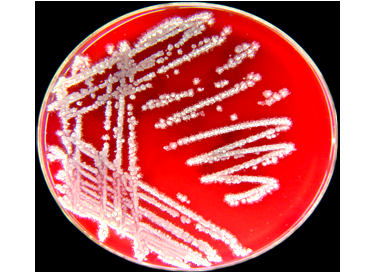
Backgrounds and objectives: Honey is increasingly recognized as a promising reservoir of beneficial microorganisms with activity against plant pathogens. However it is poorly documented that in the literature. This study contributes to explore the diversity of AMPs genes produced by Bacillus spp. isolated from honey in Burkina Faso in order to propose a biological solution against biodiversity loss, water soil pollution and pest resistance caused by chemicals pesticides.
Methods: Methodology was based on isolation and preliminarily characterization of 40 presumptive Bacillus spp. followed by their survival under thermal stress, salt tolerance and AMPs related genes identification.
Results: Data from PCR analysis revealed that all isolates belonged to the genus Bacillus. In total, 70% of strains carried at least one AMP gene, in which 50% carried one gene. Regarding AMPs-gene associations, 25% carried two genes, 14.3% carried three genes, 7.1% carried four genes, and 3.6% carried five of the six targeted AMP-genes.
Conclusions: These data indicate that honey produced in Burkina Faso could be used to isolate Bacillus strains with genetic potential for broad-spectrum antimicrobial activity. This efficacy could be tested in future studies to confirm these findings.
Peer Review History:
Received 6 April 2026; Reviewed 12 May 2026; Accepted 9 June; Available online 15 July 2026
Academic Editor: Dr. Marwa A. A. Fayed , University of Sadat City, Egypt, [email protected]
Reviewers:
Dr. Fatehalrahman F. Magbool, University of Khartoum, Sudan, [email protected]
Dr. George Zhu, Tehran University of Medical Sciences, Tehran, Iran, [email protected]
Downloads


Published
How to Cite
Issue
Section
Copyright (c) 2026 Universal Journal of Pharmaceutical Research

This work is licensed under a Creative Commons Attribution-NonCommercial 4.0 International License.







 .
.