
MOLECULAR MODELING AND VIRTUAL SCREENING FOR COMPUTER-AIDED DESIGN OF HCV NS5B POLYMERASE INHIBITORS
-
 Bertrand-Ulrich Yavo
Laboratory of Fundamental and Applied Physics, UFR SFA, Nangui Abrogoua University, BP 801 Abidjan 02, Côte d’Ivoire.
Bertrand-Ulrich Yavo
Laboratory of Fundamental and Applied Physics, UFR SFA, Nangui Abrogoua University, BP 801 Abidjan 02, Côte d’Ivoire.
-
Akori Elvice Esmel
Laboratory of Fundamental and Applied Physics, UFR SFA, Nangui Abrogoua University, BP 801 Abidjan 02, Côte d’Ivoire.
-
Kouakou Jean-Louis Kouakou
Laboratory of Fundamental and Applied Physics, UFR SFA, Nangui Abrogoua University, BP 801 Abidjan 02, Côte d’Ivoire.
-
Melalie Kéita
Laboratory of Fundamental and Applied Physics, UFR SFA, Nangui Abrogoua University, BP 801 Abidjan 02, Côte d’Ivoire.
-
Megnassan Eugène
Laboratory of Fundamental and Applied Physics, UFR SFA, Nangui Abrogoua University, BP 801 Abidjan 02, Côte d’Ivoire. ICTP-UNESCO, QLS, Strada Costiera, 11, I-34151, Trieste, Italy.
Keywords:
Computer-aided rational design, inhibitors, molecular dynamics, NS5B polymerase, pharmacophore, QSAR, quinazolinone derivatives, virtual screeningAbstract
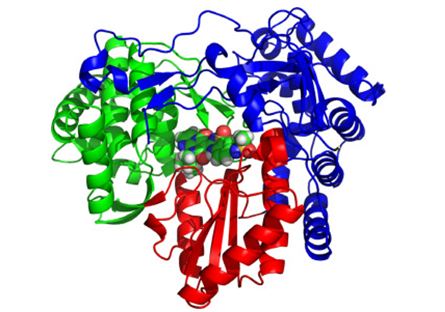
Aims and objectives: This study aims to design new inhibitors for the Hepatitis C Virus (HCV) Non-Structural Protein 5B (NS5B) polymerase, an enzyme essential for viral replication. The research addresses an urgent public health issue affecting 71 million people and causing approximately 242,000 deaths annually.
Methodology: The research follows a computer-aided rational design approach. A Quantitative Structure-Activity Relationship (QSAR) model was developed using 24 quinazolinone derivatives (QDs) to correlate Gibbs free energy with experimental inhibition constants. The bound conformations of the ligands were used to construct a 3D-QSAR pharmacophore (PH4) model. A virtual library of 168,750 QDs was generated and filtered using ADME (Absorption, Distribution, Metabolism, and Excretion) criteria and PH4 screening. Conformational stability was evaluated through 200-ns molecular dynamics (MD) simulations. Binding free energy variations were quantified using the Molecular Mechanics - Generalized Born Surface Area (MM-GBSA) approach on MD trajectories, calculating molecular mechanics energy, solvation energy, and surface area contributions under the OPLS2005 force field.
Results: The QSAR model showed high predictive power and the PH4 model achieved an R2 of 0.85. Screening identified 39 potent analogues. The lead candidate, 3-6-4-45, exhibited a predicted inhibitory concentration of 0.62 nM, approximately 96 times more active than the best reference ligand (60 nM). MD simulations confirmed stability with RMSD values between 1.5 and 3 Å. MM-GBSA binding energies converged with predicted complexation energies, validating the computational reliability.
Conclusion: The integration of molecular modeling and in silico screening successfully identified six potent candidate inhibitors of the HCV NS5B polymerase with favorable pharmacokinetic profiles. These analogues represent high-affinity candidates for future therapeutic development.
Peer Review History:
Received 5 April 2026; Reviewed 13 May 2026; Accepted 10 June; Available online 15 July 2026
Academic Editor: Dr. Iman Muhammad Higazy , National Research Center, Egypt, [email protected]
Reviewers:
Dr. Sarfaraz Ahmed, Global Institute of Pharmaceutical Education and Research, Kashipur, Uttarakhand, India, [email protected]
Prof. Amani S. Awaad, Prince Sattam Bin Abdulaziz University, Al-Kharj. KSA., [email protected]
Downloads


Published
How to Cite
Issue
Section
Copyright (c) 2026 Universal Journal of Pharmaceutical Research

This work is licensed under a Creative Commons Attribution-NonCommercial 4.0 International License.







 .
.