
SUGAR SYRUP AS A CYTOLOGICAL FIXATIVE: A COMPARATIVE STUDY WITH 95% ETHANOL DURING ROUTINE PAPANICOLAOU STAINING
-
 Ussi Hamza Ussi
School of International Education, Southern Medical University, China. School of Health & Medical Science, The State University of Zanzibar, Suza, Tanzania.
Ussi Hamza Ussi
School of International Education, Southern Medical University, China. School of Health & Medical Science, The State University of Zanzibar, Suza, Tanzania.
-
John Tongolani Mdee
Department of Pathology, Kilimanjaro Christian Medical Centre (KCMC), Tanzania.
-
Said Salim Said
Zanzibar Food and Drug Agency, Tanzania.
-
Tasnim Thabit Salum
School of Health & Medical Science, The State University of Zanzibar, Suza, Tanzania.
-
Chifundo Makweza
Queen Elizabeth Central Hospital, Malawi, Tanzania.
-
George Chikondi Samu
School of Public Health, Southern medical University, China
-
Suleiman Masoud Suleiman
Chief Government Chemist Laboratory Agency, Ministry of Health, Zanzibar, Tanzania.
-
Amos Rodger Mwakigonja
Pathology Department Muhimbili University of Health and Allied Sciences, Tanzania.
Keywords:
Alternative fixative, cytology, papanicolous stain, pap smear, cytologicalfixative, 30% sugar syrup fixative, 95% ethanol fixativeAbstract
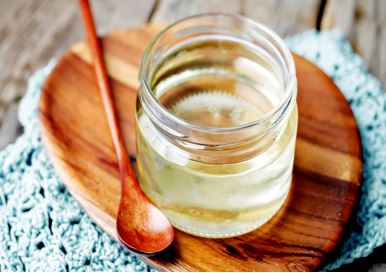
Background and Objective: Fixation is an initial and important step in cytology for microscopic examination in cytopathological techniques, which ensures the preservation of cell morphology and structures. The routine cytological fixative at Muhimbili National Hospital (MNH), Central Pathology Laboratory (CPL), is 95% ethanol, which causes shrinkage of the cell which disrupts the physical structure of almost any type of membrane, including the plasma membrane, membrane of cell organelles and liposomes. Objective of present study was to assess the effectiveness of 30% sugar syrup as a cytological fixative as compared to 95% Ethanol in Papanicolaou staining procedures in Cytology unit at MNH.
Methods: The study design was cross-sectional prospective study conducted at MNH in histopathology laboratory from April to August 2023. Whereby Thirty cytological samples were obtained from different bodily fluids, including pleural (n=12), ascetic (n=10), peritoneal (n=5), and pericardial (n=3). Whereby nuclear staining, cytoplasmic staining and cell morphology were examined under the light microscope at X40 magnification.
Results: A paired study of thirty specimens revealed that two fixatives created bad quality in two specimens (6.7%), ethanol alone produced good quality in eight specimens (26.7%), sugar syrup alone produced good quality in two specimens (6.7%), and both fixatives produced good overall staining quality in eighteen specimens (60%). While 30% sugar syrup produced acceptable staining quality in 20 of 30 specimens (66.7%), 95% ethanol demonstrated superior staining quality in 26 of 30 specimens (86.7%).
Conclusion: The paired statistical analysis did not reveal a significant disparity between the two fixatives, notwithstanding the greater absolute percentage of satisfactory staining quality observed with 95% ethanol. Consequently, 30% sugar syrup may serve as a viable alternative fixative when 95% ethanol is either unavailable or unsuitable.
Peer Review History:
Received 12 February 2026; Reviewed 9 March 2026; Accepted 11 April; Available online 15 May 2026
Academic Editor: Dr. Nuray Arı , Ankara University, Turkiye, [email protected]
Reviewers:
Prof. Hassan A.H. Al-Shamahy, Sana'a University, Yemen, [email protected]
Dr. Ogbonna B. Onyebuchi, Nnamdi Azikiwe University, Awka, Nigeria, [email protected]
Downloads


Published
How to Cite
Issue
Section
Copyright (c) 2026 Universal Journal of Pharmaceutical Research

This work is licensed under a Creative Commons Attribution-NonCommercial 4.0 International License.







 .
.