
MAXILLOFACIAL FRACTURES AT THE TIME OF HARDWARE REMOVAL: AETIOLOGY, SURGICAL THERAPY, IDENTIFICATION OF POSTOPERATIVE INFECTIONS, AND ANTIBIOTIC PATTERN OF ISOLATES
-
 Lutf Mohammed Al-Rahbi
Department of Oral and Maxillo-Facial Surgery, Faculty of Dentistry, Sana’a University, Republic of Yemen. Yemen Medical Specialist Council, Ministry of Health and population, Yemen.
Lutf Mohammed Al-Rahbi
Department of Oral and Maxillo-Facial Surgery, Faculty of Dentistry, Sana’a University, Republic of Yemen. Yemen Medical Specialist Council, Ministry of Health and population, Yemen.
-
Hend Naji Al-Sabri
Yemen Medical Specialist Council, Ministry of Health and population, Yemen.
-
Ahmed Abdulah Al-Ashwal
Department of Oral and Maxillo-Facial Surgery, Faculty of Dentistry, Sana’a University, Republic of Yemen. Yemen Medical Specialist Council, Ministry of Health and population, Yemen.
-
Hassan Abdulwahab Al-Shamahy
Department of Basic Sciences, Faculty of Dentistry, Sana’a University, Republic of Yemen. Medical Microbiology and Clinical Immunology Department, Faculty of Medicine and Health Sciences, Sana’a University.
Keywords:
Antibiotic pattern, bacterial causes, hardware removal, mandibular fracture, maxillofacial fractures, postoperative infectionsAbstract
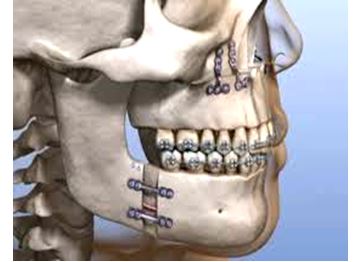
Background and Aims: A mandibular fracture, or jaw fracture, typically occurs at two sites in about 60% of cases, potentially limiting mouth opening and causing gum bleeding and misalignment of teeth. This study aimed to identify the bacterial causes of postoperative infections, the aetiology of fractures, surgical treatment, and the antibiotic resistance profile of bacteria from patients with maxillofacial fractures at the Military Hospital in Sana'a, Yemen.
Materials and Methods: The Department of Oral and Maxillofacial Surgery at the Military Hospital in Sana'a, Yemen, treated thirty patients with maxillofacial fractures from January to December 2024. They used fracture fixation hardware and conducted follow-ups six months post-surgery. The study assessed the incidence of postoperative bacterial infections at surgical sites after hardware removal, employing standard microbiological techniques for isolate identification and the Kirby-Bauer method for antibiotic susceptibility testing, alongside collecting clinical and demographic data from participants.
Results: Most fractures were open compound fractures (56.7%), all of which were mandibular fractures. For 60% of patients, open reduction internal fixation (ORIF) was the most frequently used surgical procedure. Staphylococcus aureus accounted for 27 (90%) of all isolates from surgical sites, with Klebsiella pneumoniae coming in second at 30%. Three instances (10%) had no bacterial growth. Amoxicillin, augmentin, aztreonam, cefotaxime, cefoxitin, ceftazidime, piperacillin, ceftriaxone, and doxycycline did not work at all against isolates of S. aureus.
Conclusion: According to the survey, individuals aged 20 to 24 represented 56.7% of cases, primarily due to gunshot wounds. The bacterium S. aureus, noted for its significant multidrug resistance, was the most commonly isolated pathogen. Vancomycin emerged as the most effective treatment for Staphylococcus aureus infections.
Peer Review History:
Received 5 October 2025; Reviewed 9 November 2025; Accepted 17 December; Available online 15 January 2026
Academic Editor: Dr. Ahmad Najib , Universitas Muslim Indonesia, Indonesia, [email protected]
Reviewers:
Dr. Dina Abd Elfattah Eldakhs, Pharos university (PUA), Egypt, [email protected]
Ahmed Tagelsir Mohamed Ali, National University, Sudan, [email protected]
Downloads


Published
How to Cite
Issue
Section
Copyright (c) 2026 Universal Journal of Pharmaceutical Research

This work is licensed under a Creative Commons Attribution-NonCommercial 4.0 International License.







 .
.