
WAR AND BLOOD TRANSFUSION CRISES: ADDRESSING BLOOD SHORTAGES, COLD-CHAIN DISRUPTIONS AND TRANSFUSION RISKS THROUGH CONFLICT-RESILIENT BLOOD SYSTEMS
-
 Emmanuel Ifeanyi Obeagu
Division of Haematology, Department of Biomedical and Laboratory Science, Africa University, Mutare, Zimbabwe.
-
Oripha Chimwara
Department of International Relations and Diplomacy, Africa University, Mutare, Zimbabwe.
-
Okwudili B. Nwankwo
Department of Haematology, Chukwuemeka Odumegwu Ojukwu University, Awka, Anambra State, Nigeria.
Keywords:
armed conflict, blood transfusion, blood shortages, cold-chain integrity, hemovigilanceAbstract
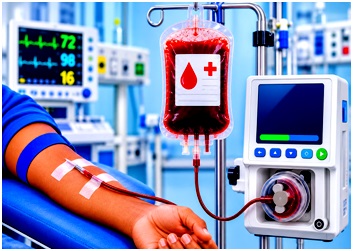
Armed conflict results in a complicated situation for blood transfusion services by halting blood collection, decreasing donor availability, harming healthcare infrastructure, disrupting cold-chain processes, and raising the demand for vital transfusions. These problems affect trauma victims, women dealing with obstetric hemorrhage, children suffering from severe anemia, and those requiring ongoing transfusion support. This narrative review examines the impact of conflict on blood supply, the quality of components, transfusion safety, and continuous care. It analyzes shortages caused by conflicts, failures in refrigeration, delays in transportation, disruptions in compatibility testing, emergency blood transfusion releases, and lack of hemovigilance. Focus is on methods to improve resilience in blood services, including decentralized collection and distribution, strategic inventory management, solar-powered refrigeration, authorized alternative transport, digital traceability, and patient blood management. The evaluation also includes fair distribution, safeguarding the healthcare workforce, regulatory supervision, and humanitarian partnership. Advanced technologies like drones and renewable energy systems can enhance operational continuity but need validation, ongoing funding, and context-specific assessment. Future studies ought to evaluate cold-chain efficiency, compare logistics, enhance hemovigilance, and analyze cost-effectiveness and equitable access. Ultimately, successful blood transfusion services must integrate reliable infrastructure, trained personnel, evidence-based clinical protocols, structured supply networks, and continuous quality evaluation to reduce preventable transfusion-related harm and uphold life-saving assistance before, during, and after military conflicts.
Peer Review History:
Received 22 July 2026; Reviewed 5 September 2026; Accepted 8 October; Available online 15 November 2026
Academic Editor: Dr. Muhammad Zahid Iqbal , AIMST University, Malaysia, [email protected]
Reviewers:
Dr. Sabah Hussien El-Ghaiesh, Tanta University, Egypt, [email protected]
Rusmir Baljic, Clinic for infectious diseases, Clinical center University of Sarajevo, Bosnia and Herzegovina. [email protected]
Downloads


Published
How to Cite
Issue
Section
Copyright (c) 2026 Universal Journal of Pharmaceutical Research

This work is licensed under a Creative Commons Attribution-NonCommercial 4.0 International License.







 .